

Bring in a credentialed third-party indoor-air professional.
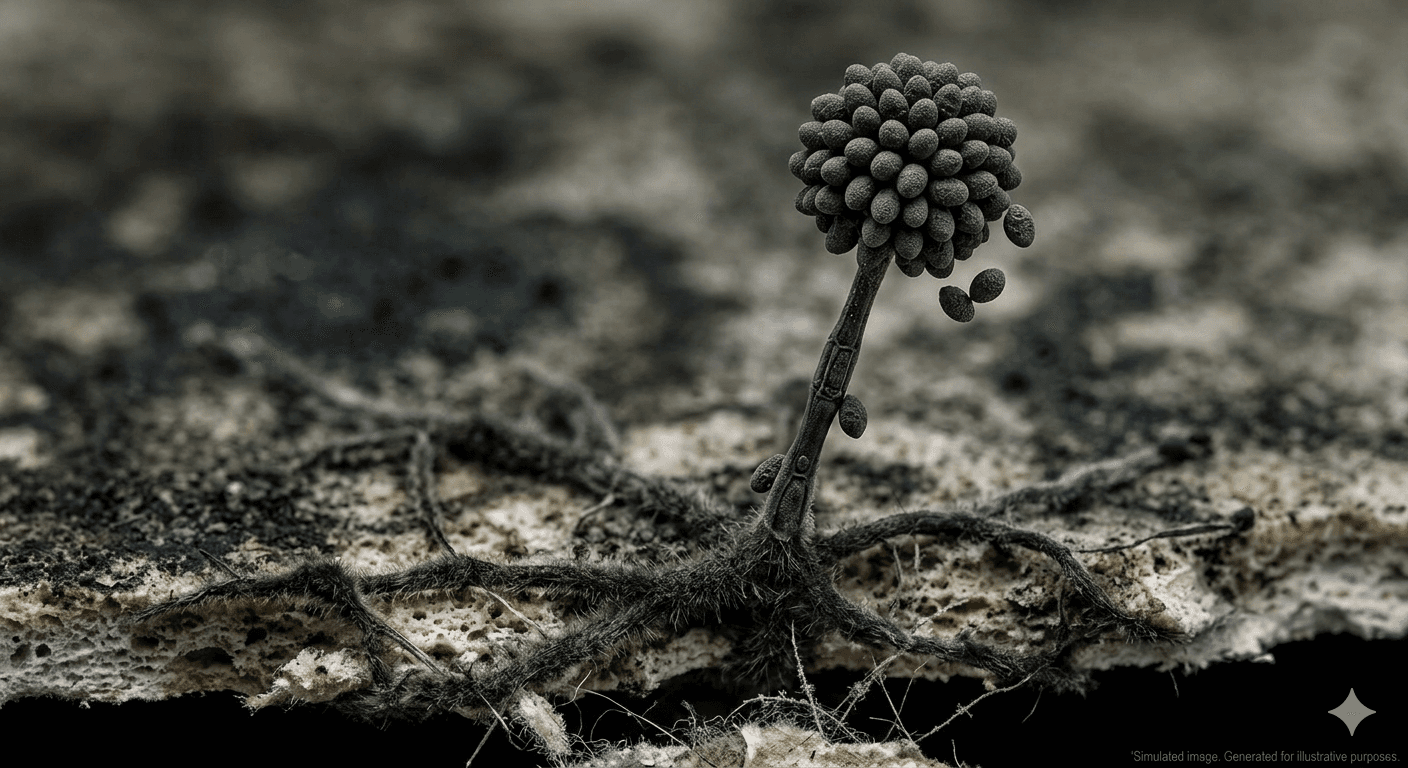
Roughly 100,000 species could be classified as mold. Identifying which one you have — and which one matters — is not a contractor's job. We coordinate with a 3rd-party Hygienist and execute against their protocol.
Containment first. Always.
- 01Source identification. Find the moisture source. Mold doesn't grow without water — fix the cause or it will come back.
- 02Containment. Plastic barriers, negative-air machines, and a clearly marked work zone before any disturbance.
- 03Hygienist engaged. We bring in a 3rd-party 3rd-party indoor-air professional (ACAC- or AIHA-credentialed) to test, identify species, and write the remediation protocol.
- 04Removal & cleaning. Affected materials removed under containment. HEPA vacuuming and antimicrobial application on what remains.
- 05Post-remediation verification. Hygienist returns for clearance testing. We don't close the wall until clearance passes.
- 06Build-back. Drywall, paint, flooring, and finishes restored.
Why we don't guess at species.
Approximately 100,000 organisms could be classified as mold, and the remediation protocol depends heavily on which species is present. Stachybotrys (black mold) requires a vastly different scope than Cladosporium, which is in nearly every house in the Midwest.
We work with three 3rd-party laboratory vendors and go with whichever can get results back fastest. The Hygienist's report is the source of truth for the project — not our opinion or anyone else's.
References: PLOS ONE 2013 · Life 2025
Roles & licensing
- Missouri testing. Mold testing is performed by a credentialed third-party indoor-air professional (ACAC or AIHA). Wiley Services holds the Missouri DHSS Lead Renovator (RRP) license for use of EPA-recognized lead test kits on components we will disturb in pre-1978 housing; formal lead inspection or risk assessment is performed by separately licensed Lead Inspectors or Risk Assessors.
- Kansas testing. We hire a 3rd-party Hygienist for Kansas work — state requirements differ.
- Verification. All findings confirmed by 3rd-party clearance testing.
- Abatement. Specialty abatement crews on standby through our subcontractor network.
What mold remediation typically costs.
$2,000 – $5,000
Localized, single area, accessible.
$5,000 – $10,000
Multiple rooms, HVAC involvement, or hidden growth in cavities.
$10,000+
Whole-home, structural saturation, or specialty species.
Pricing depends heavily on species, accessibility, and the Hygienist's clearance protocol. Hiring a 3rd-party indoor-air professional (ACAC- or AIHA-credentialed) takes the guesswork out of scope — and out of pricing.
See something growing? Don't disturb it.
Disturbing mold spreads spores. Call before you cut, scrape, or wash. We'll set containment first, identify second.