

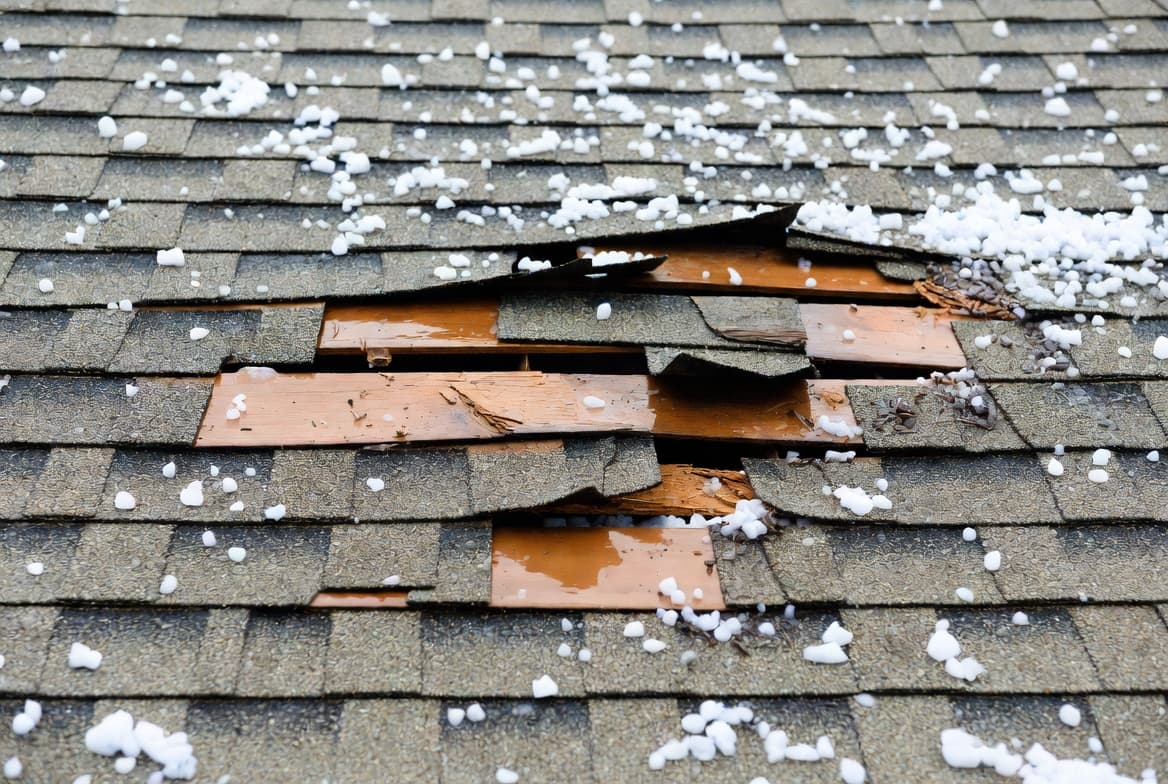
If you live anywhere between Lathrop and Lee's Summit, you already know the spring drill: severe weather rolls through, the sirens go off, and 48 hours later you're staring at the roof wondering if you have a claim. After 26 years of restoring homes across the Kansas City Metro, here's the inspection routine we run after every major storm.
When to inspect
Any storm with hail larger than a quarter (about an inch), straight-line winds over 60 mph, or a confirmed tornado warning in your zip code warrants an inspection. Missouri's primary storm window is March through October, with the worst hail events historically in April, May, and June. Winter brings a different damage pattern — ice damming, downed trees, and freeze-related roof leaks — which we cover in a separate article.
The visible damage checklist
Walk the perimeter of the house and check each item below. Most damage that affects a claim is not visible from the ground.
- Shingles: missing tabs, lifted corners, granule loss in gutters, dark spots where the asphalt mat is exposed.
- Soft metals: gutters, downspouts, A/C condenser fins, mailbox, grill, exterior light fixtures. Dents in soft metal correlate to impact energy that also affected your roof.
- Vents and ridge caps: cracked plastic, bruised metal, displaced rubber boots around plumbing vents.
- Siding: cracks, holes, missing pieces. Vinyl siding fails brittle in cold weather hail.
- Window screens: tears, holes. A torn screen often means hail of meaningful size.
- Garage door panels: dents, bowing, broken springs.
- Outdoor furniture: dimpling on aluminum, scratches on plastic — useful for documenting hail size.
Soft-metal damage: the claim most contractors miss
This is the single most common scope omission we see on storm claims, and it's the one homeowners pay for two years later when leaks show up at the ventilation system.
When hail hits soft metals — gutters, flashings, ridge vents, and the ventilation system on the roof itself — it leaves bruises that don't look like a problem on day one. Those bruises compromise the metal's integrity at the joints and around penetrations. Water finds the weak spot, often months or years later, and starts leaking into the attic from the ventilation system.
Document every soft-metal hit on the inspection report. Including damage in the initial scope your contractor and adjuster review together is cleaner than surfacing it months later, when matching the damage to the storm event becomes a more involved exercise for both you and the carrier.
Interior damage that points to roof issues
Some storm damage shows up first inside the house, not on the roof. Walk every room and look for:
- Water stains on ceilings, especially near can lights, bath fans, and attic access hatches.
- Damp drywall around plumbing vents on the upper floor.
- Brown or yellow rings on textured ceilings where the texture is starting to lift.
- Insulation visible through small holes in attic-facing surfaces.
- A new burning-dust smell when the heat or A/C kicks on — sometimes wet insulation around the HVAC system.
Document, then call
- 01Photograph everything wide, then close. Include something for scale (a coin, a tape measure, your hand).
- 02Note the date and approximate time of the storm.
- 03Save any local news coverage or weather service confirmations of hail size and wind speed.
- 04Call your insurance agent to ask whether to file. If you're not sure, call us first — inspections are free and we'll tell you straight if it warrants a claim.
- 05Do not climb on the roof unless you are trained and equipped for it. We're insured for that work.
Your right to choose a contractor
In Missouri, the homeowner has the right to choose their contractor for storm and roof claims — unless you've signed an endorsement on your policy that limits that choice in exchange for premium savings. Read your declarations page, and if you're not sure, call your agent before signing anything.
Why local matters
After every major hail event in the metro, out-of-state storm-chasers show up in trucks with magnetic signs and promises of a free roof. Most of them are gone before the first supplement gets filed. Wiley Services has been here for 26 years. We'll be here for the warranty call. We'll be here for the next storm. That's not marketing — it's just the reality of the math.
About the author
Derick Wiley is the owner and lead estimator at Wiley Services, an owner-led general contracting and IICRC-certified restoration firm based in Lathrop, MO. He's spent 26 years in the industry and personally writes every Wiley Services estimate.